Ecuador: Orchids and the Galapagos
This trip to Ecuador’s highlands and the Galapagos is motivated by the idea to show a sample of Ecuador’s amazing biodiversity and to take advantage of the OCA’s unique relationship with Fundación EcoMinga, one of Ecuador’s premier conservation organizations. Fundación EcoMinga and the OCA were both born at a luncheon at Peter Tobias’ house in Encinitas, CA in 2004. Lou Jost, Fundación EcoMinga’s founder, had presented some of his work surveying the orchids around Baños de Agua Santa, in Ecuador’s central highlands, to the San Diego County Orchid society. At that luncheon Ed Dove asked what it would cost to create a reserve that would protect the orchids Lou had discussed. The amount Lou came up with, $10,000, seemed quite approachable and the idea of an organization to raise those funds and others for future projects was borne. For his part, Lou returned to Ecuador and organized some friends to create Fundación EcoMinga. To date, the OCA has donated over $350,000 to Fundación EcoMinga. Fundación EcoMinga has also raised funds from many other sources and now has more than 50 square miles of pristine biodiversity under its protection.
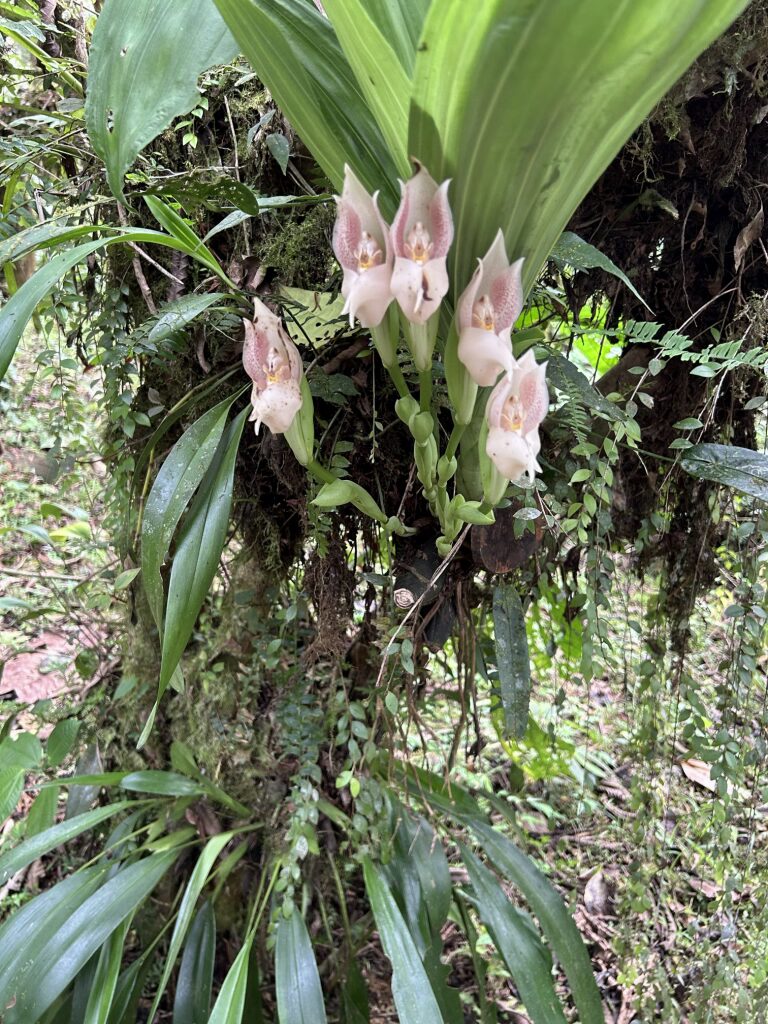
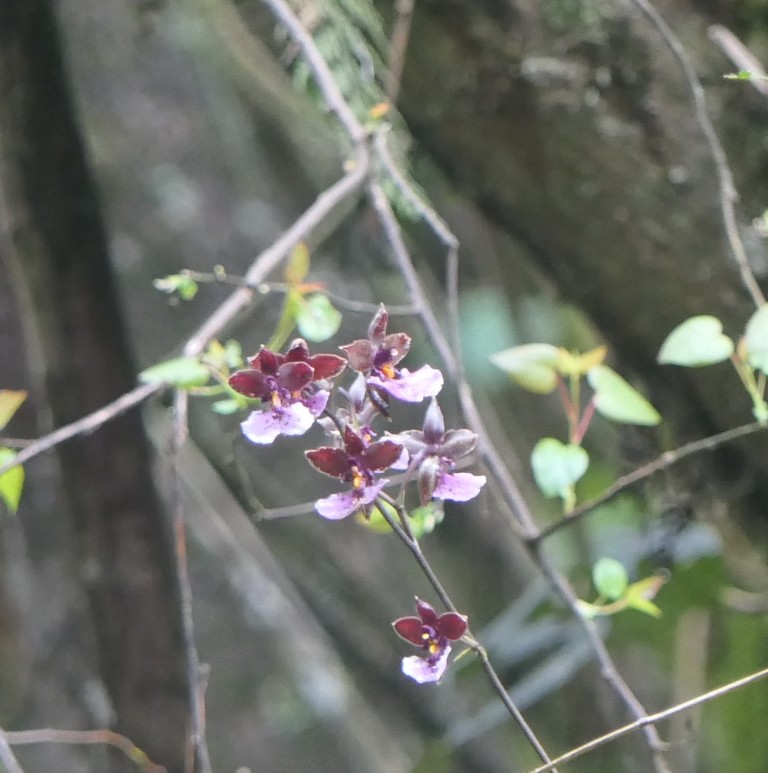
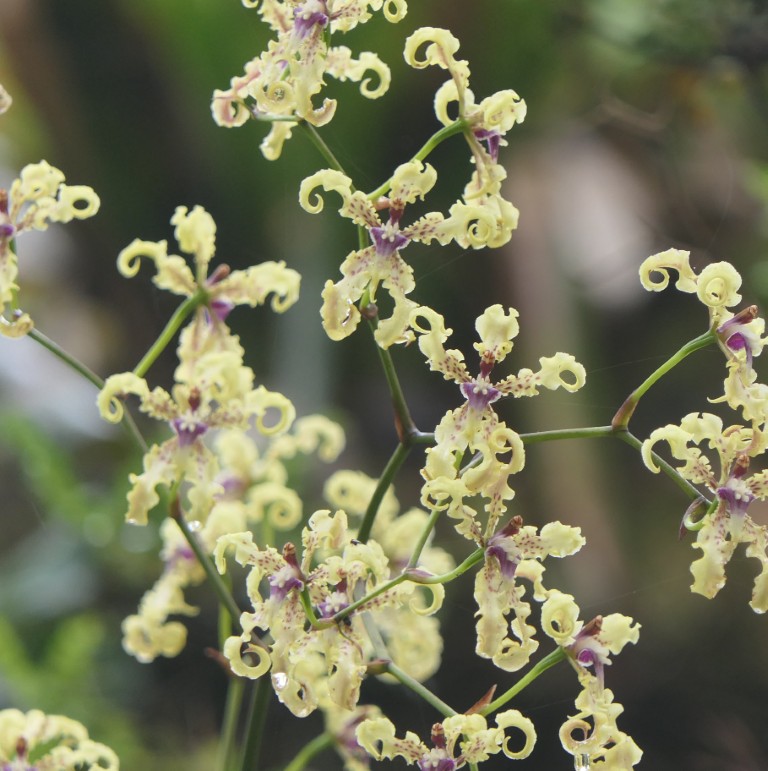
In 14 days and 13 nights we can hardly scratch the surface of Ecuador’s biodiversity; we will touch on two highlights, the orchids and other flora, and some of the birds, especially hummingbirds, of central Ecuador and the Galapagos, two extraordinary locations. The Galapagos are justly famous for their endemic species and for having inspired Darwin’s theory of evolution. The Andes mountains around Baños de Agua Santa actually have more endemic species than the Galapagos. Travelers will experience these locations in the company of professional guides, versed both in the identities and back-stories of the biodiversity and in enabling travelers to see them.
Dates & Prices
Dates: March 6 to March 19, 2027 (14 days, 13 nights)
Price: Because the trip involves chartering a boat which can’t be unchartered after May 31, 2026 we are offering a $600 early bird discount.
Early Bird Registration price is $7,750 pp (double occupancy). Single occupancy for early bird registration is 12,050. Early Bird Registration deposit of $1,000 due on or before May 31, 2026.
Regular Registration price is $8,350 pp (double occupancy). Single occupancy $12,650. Regular Registration deposit is $1,000 on or after June 1, 2026. Note, there is limited availability of single rooms on the Infinity Yacht.
Deposits are non-refundable except in case of trip cancellation.
First half of full payment is due by July 31, 2026. Second half of full payment is due by January 1, 2027.
Price of trip includes: All meals, lodging for nights of Mar 6 – Mar 18 inclusive, transportation including flights between Quito and the Galapagos, guides, and entry fees. Price does not liquor, souvenirs and other personal purchases. Price does not include individual passes to the Galápagos National Park ($200) and the transit fee ($20) from the mainland to the Galápagos; these must be paid in cash by individual participants. Price does not include tips for the Infinity Yacht crew, recommended at $100 per trip participant, or tips for Galápagos nature guides, recommended at $80 per trip participant. Price does not include one meal in the Galápagos and one meal in Quito, when participants will be on their own; restaurant recommendations will be available. Price does not include a checked bag to and from the Galápagos.
Level of exertion: In the Andes, several times we will be at altitudes between 11,000 and 12,000 feet. This can be challenging for many people and potential trip participants should check with their physicians if they have any concern that the altitude could be a problem. With one exception, virtually all the walking in the Andes is on fairly level ground. The one exception is the hike to Reserva Rio Anzu. Reserva Rio Anzu is at roughly 6000 feet elevation, similar to Denver. This hike involves a 400 foot elevation change in a distance of approximately one-half mile; an alternative guided walk will be available.
Conservation donation: An amount based on the trip’s profit (~$1000/person) is donated to the Orchid Conservation Alliance. The Orchid Conservation Alliance is a 501(c)3 organization and for USA residents, the donation may be tax deductible. A formal acknowledgment letter with the exact amount donated is sent to each participant at year’s end.
Leaders: Peter Tobias (OCA representative), a Fundación EcoMinga representative, and other local experts will lead the trip.
Group size: Including Peter Tobias, there will be 20 travelers. This number is dictated by the availability of lodging on the MY Infinity.
March 6 – Starting the Expedition.
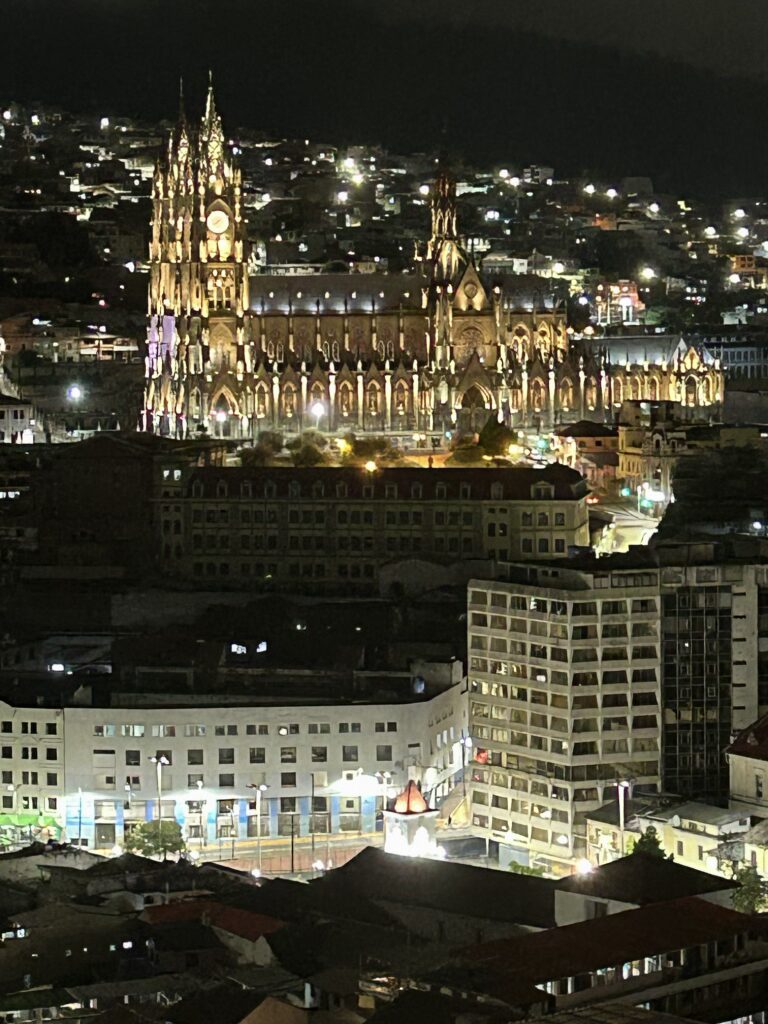
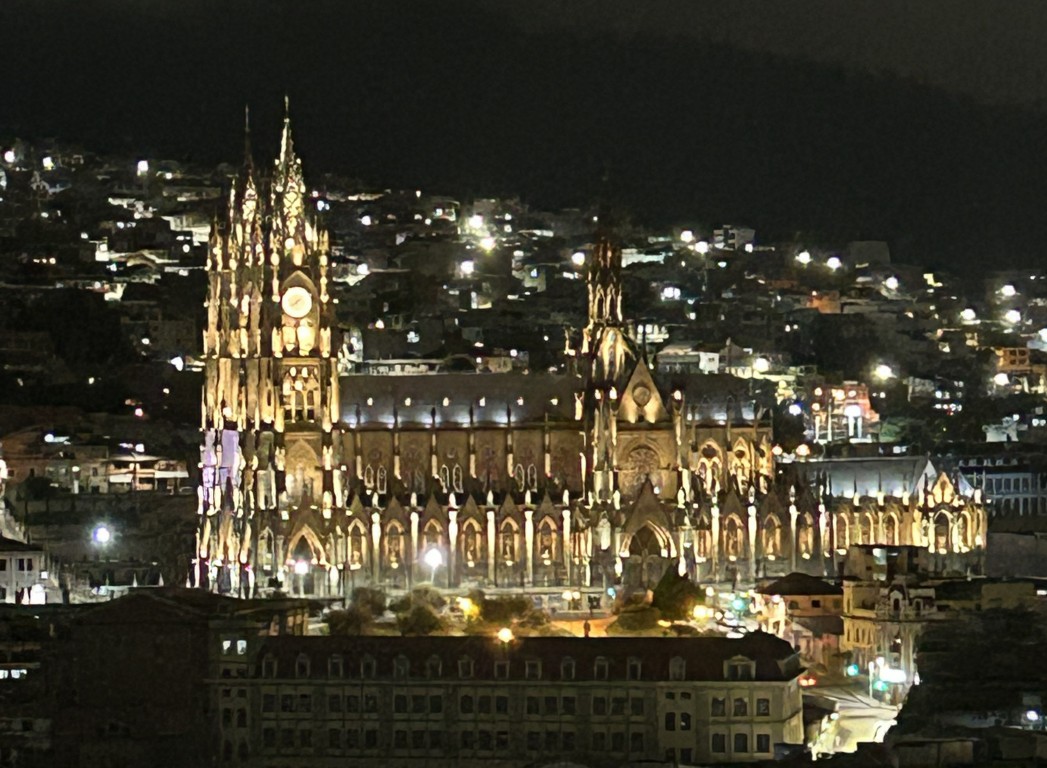
Your expedition starts with an introductory orientation at 14:00 at Hotel Casa Foch, located at Mariscal Foch E4-301 y Juan Leon Mera, in Quito, Ecuador (9,100 ft), a short visit to colonial downtown Quito in the afternoon, and snacks at an Itchimbia restaurant or bar. Lodging will be at Hotel Casa Foch.
March 7 – Western Tropical Andes.
You will depart from your Hotel Casa Foch at 6:00 am and drive over the Western Mountain Ridge toward the Tropical Andes, heading to Sachatamia Lodge (5,550 ft). After breakfast at the lodge, you will enter the cloud forest: a humid, foggy ecosystem in which you will see hummingbirds, toucans, and many small orchids.
The Tropical Andes are a major center of both orchid and bird diversity. At Sachatamia, you may observe species such as the Violet-tailed Sylph, the Pale-mandibled Aracari, and, with luck, the Long-wattled Umbrellabird.
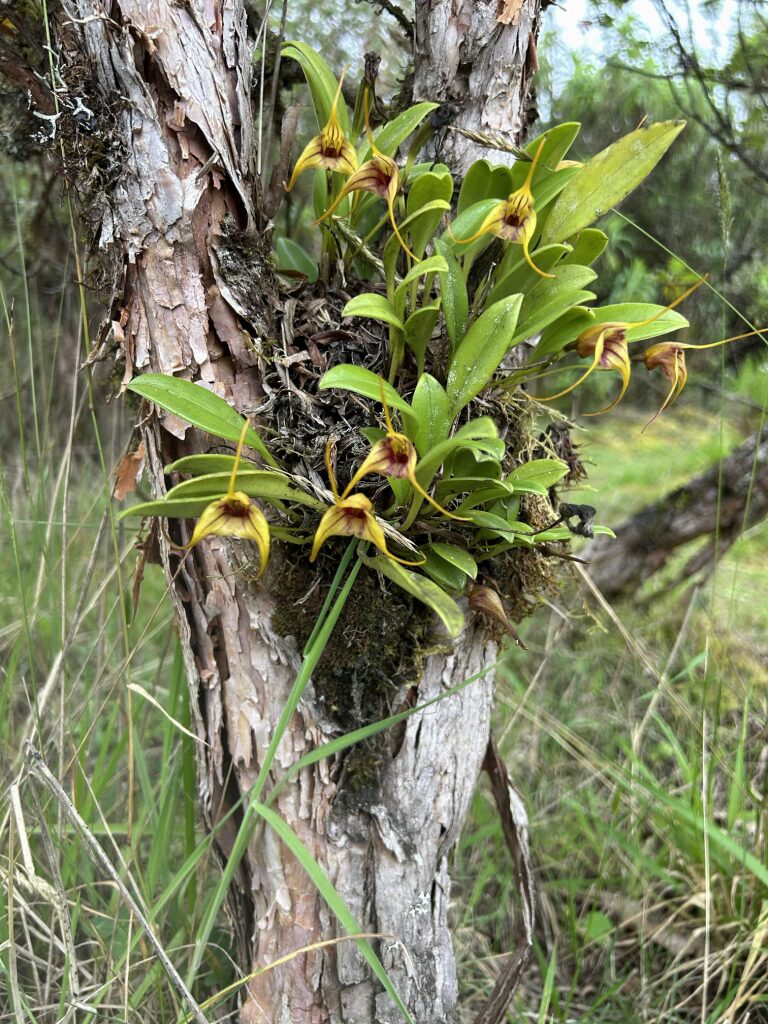
In the afternoon, you will explore the transition zone between the cloud forest and the dry shrubland of the Guayllabamba Valley in search of orchids. Genera such as Pleurothallis, Stelis, Maxillaria, Elleanthus, and Epidendrum are representative of this ecosystem within the Geobotanical Reserve Pululahua Volcano, the only reserve in the world with this designation. If time allows, you will make a short visit to latitude 0°00′00″, the Equator line. You will return to Hotel Casa Foch for dinner.
March 8 – Yanacocha Reserve.
This day you will have another early start. Yanacocha Reserve (“black lagoon” in Kichwa) is only an hour away and serves as an important refuge for one of the most endangered ecosystems in the Ecuadorian Andes: the montane forest, or elfin forest.
The trail is located at 11,480 ft, within the elevation range where an ecological transition is clearly visible. Above you lies the páramo ecosystem, with Polylepis trees growing in the surrounding landscape. Along the trail, and looking downslope, you will have clear views of the foothills of Pichincha Volcano, covered in green forest.
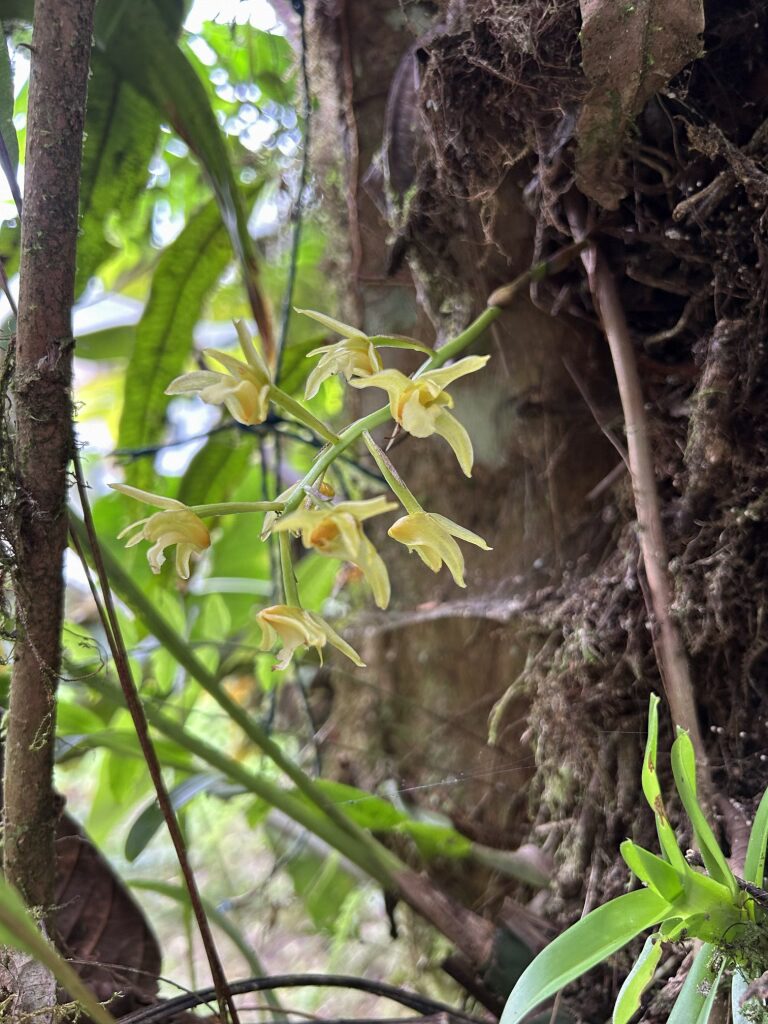
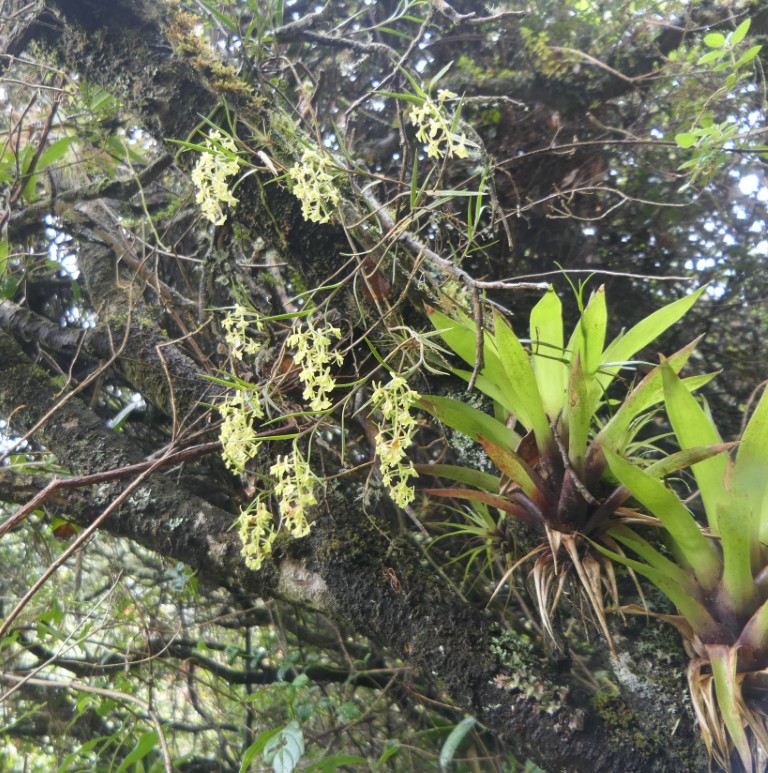
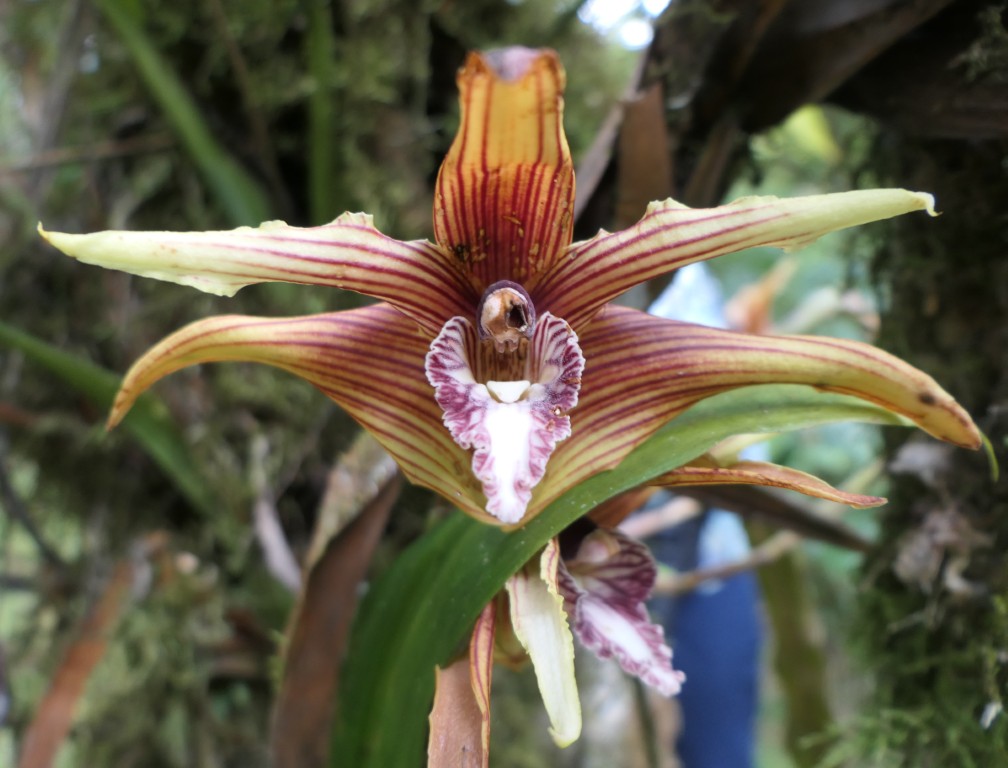
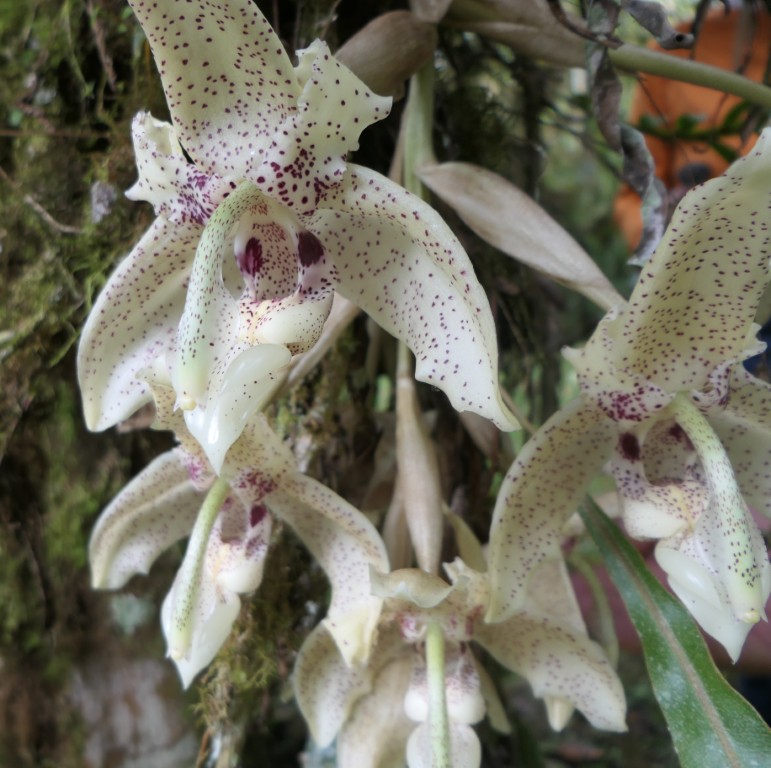
The flora here is well documented and diverse. Along the trail, you can expect to encounter genera such as Elleanthus, Maxillaria, Pleurothallis, Cyrtochilum, Sobralia, Oncidium, Aa, and others. The route has no net elevation gain or loss, resulting in a flat and steady walk.
After the hike, you will have lunch at the reserve’s guest house and spend time at the hummingbird feeders, which regularly attract species such as the Shining Sunbeam and the Great Sapphirewing, the second-largest hummingbird in Ecuador. Flower piercers are also common in the area, and, with some luck, you may observe the Sword-billed Hummingbird—the species with the greatest bill-to-body ratio of any bird.
After lunch, you will leave the montane forest and descend to an Orchid Rescue Center with a private collection of more than 300 species, many of them recovered from illegal extraction. This visit provides direct access to representatives of orchid diversity from across the Tropical Andes. After this excursion, you will return to Hotel Casa Foch where you will have time to prepare for your flight to the Galápagos Islands. Luggage can be stored at Hotel Casa Foch, so that you can travel light with only a carry-on and a backpack.
March 9 – Transfer Day Quito Galápagos
Departure time from Hotel Casa Foch will be at 06:30, leaving the city behind before rush hour, with a 45-minute drive to the airport. Upon arrival, the Galápagos transit control begins, a mandatory pre-departure procedure designed to protect the fragile ecosystems of the islands. Throughout this process, you will be assisted by Andean Study Programs staff, ensuring everything runs smoothly and efficiently.
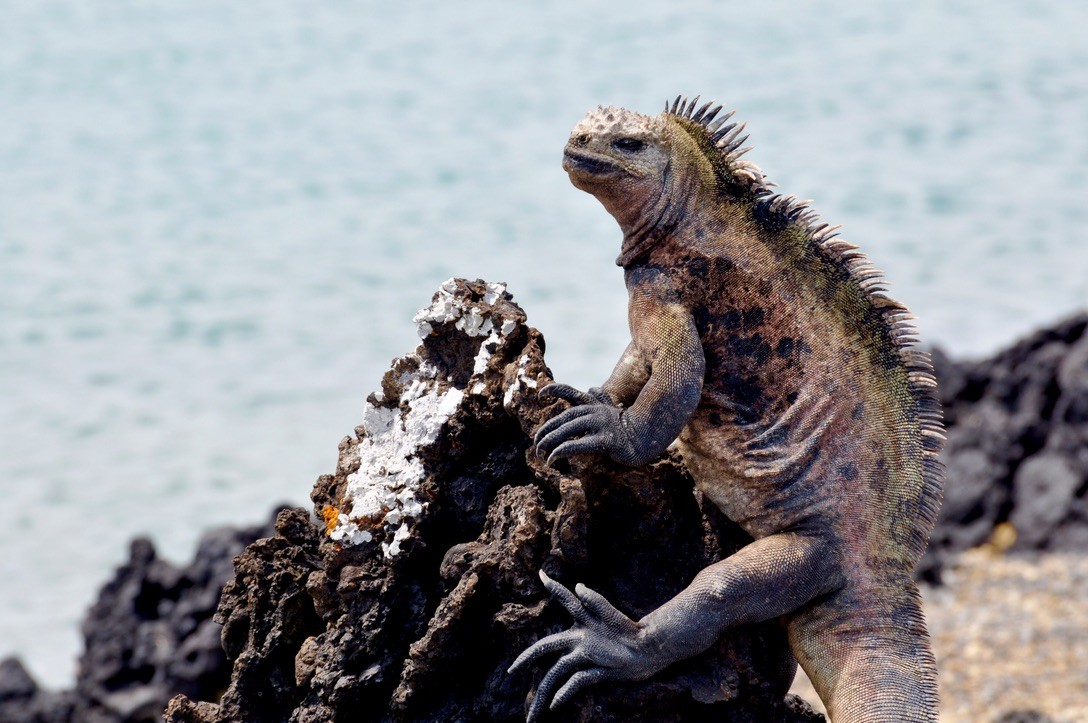
Stepping off the plane at Baltra Island, you are welcomed into a world shaped by isolation and adaptation. The arid lowlands stretch out before you, dominated by towering Opuntia cacti, iconic giants of the Galapagos. Land iguanas roam beneath them, well camouflaged against the volcanic terrain, while Darwin’s finches move actively through the vegetation, offering a first glimpse into the evolutionary processes that inspired Darwin himself.
At the arrivals gate, you will meet your naturalist guides, who will accompany you throughout your time in the islands. From here, you will be transferred directly to the Infinity Yacht, your home for the coming days. Once onboard, you will settle into your cabins, meet the crew, and receive an initial briefing as you begin navigation.
Your first excursion takes you to Black Turtle Cove, a serene mangrove estuary tucked along the northern coast of Santa Cruz Island. This sheltered inlet serves as a nursery, often referred to as a “marine kindergarten,” for a remarkable diversity of life, including juvenile reef sharks, rays, and a variety of fish species. Gliding silently through its crystal-clear waters, you will explore by dinghy, allowing for close and undisturbed wildlife observation.
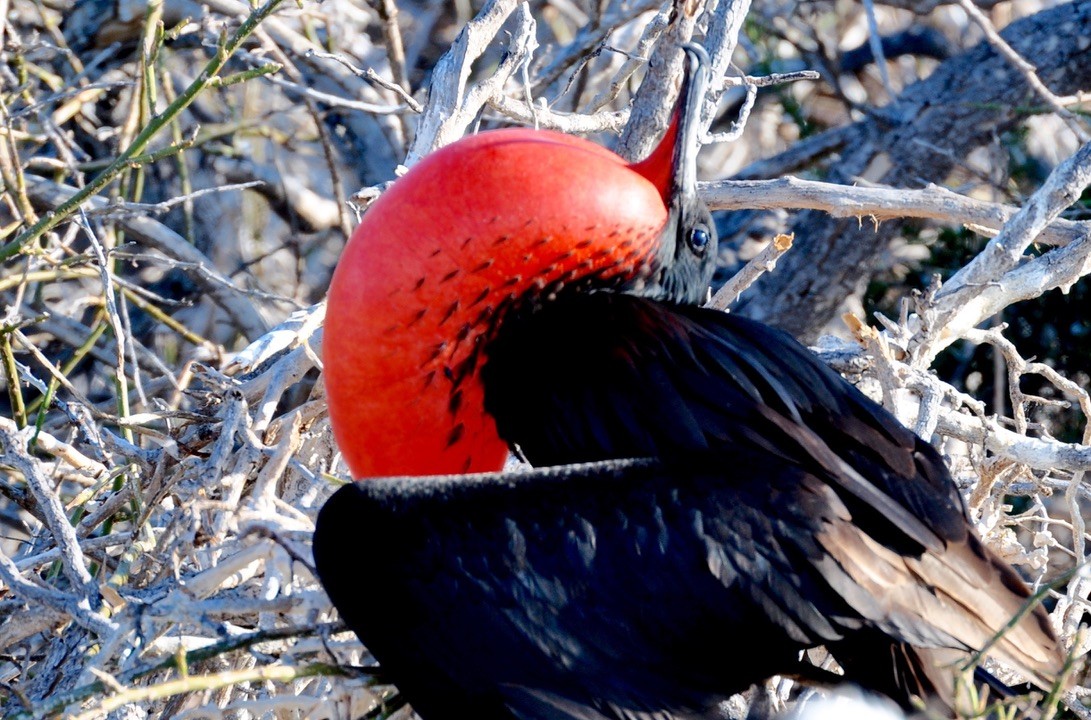
Seabirds are always present here. Blue-footed boobies may be seen plunging into the water with precision, while frigatebirds and other opportunistic species circle above, attempting to steal freshly caught prey mid-air.
As the day comes to a close, you return to the yacht, which will begin its overnight navigation toward one of the more remote eastern islands of the archipelago, setting the stage for the days ahead.
March 10 – Genovesa, Galapagos.
This day you will begin by waking up at Darwin Bay, surrounded by the towering walls of the ancient crater of Genovesa Island. After breakfast, you will head toward the crater rim. A narrow set of steps carved directly into the volcanic rock leads up to a trail of hardened lava. Along the way, the lava is fractured and split in places by the persistent growth of palo santo trees, which thrive in these arid, nutrient-poor conditions through strong drought adaptations.
Genovesa is often referred to as “Bird Island.” This remote outpost serves as a critical breeding ground for large colonies of seabirds. Red-footed Boobies nest in the low trees, while Great Frigatebirds and Magnificent Frigatebirds soar overhead. Red-billed Tropicbirds can often be seen gliding along the cliffs or nesting in crevices.
After lunch, you will have the opportunity to snorkel along the inner walls of the crater. These nutrient-rich waters attract an exceptional diversity of marine life. This area is an important habitat for the Scalloped Hammerhead Shark, and while sightings cannot be guaranteed, encounters with small groups are not uncommon.
For those seeking a more relaxed pace, kayaking along the crater walls offers a quiet, immersive way to observe the landscape, with seabirds passing overhead and the dramatic geology rising around you.
Later in the afternoon, you will head to the beach to further explore the island’s unique flora and fauna. This is an excellent opportunity to search for two endemic species: the Genovesa Cactus Finch and the Genovesa Ground Finch, both found only here. The island’s distinctive Opuntia cacti, adapted to withstand both drought and herbivory, are also a defining feature of this ecosystem.
March 11 – Santiago and Rabida Island, Galapagos.
Following another overnight navigation aboard the Infinity Yacht, you will wake up along the shores of Santiago Island. The morning begins with a short coastal hike across a landscape shaped by past volcanic activity—fields of solidified lava flows, fragmented by time and erosion, revealing the island’s dynamic geological history.
As you explore the area, keep an eye out for one of the archipelago’s most iconic and unexpected inhabitants: the Galápagos Penguin, the only penguin species found north of the Equator, often seen resting on rocky shores or darting through the water in search of fish.
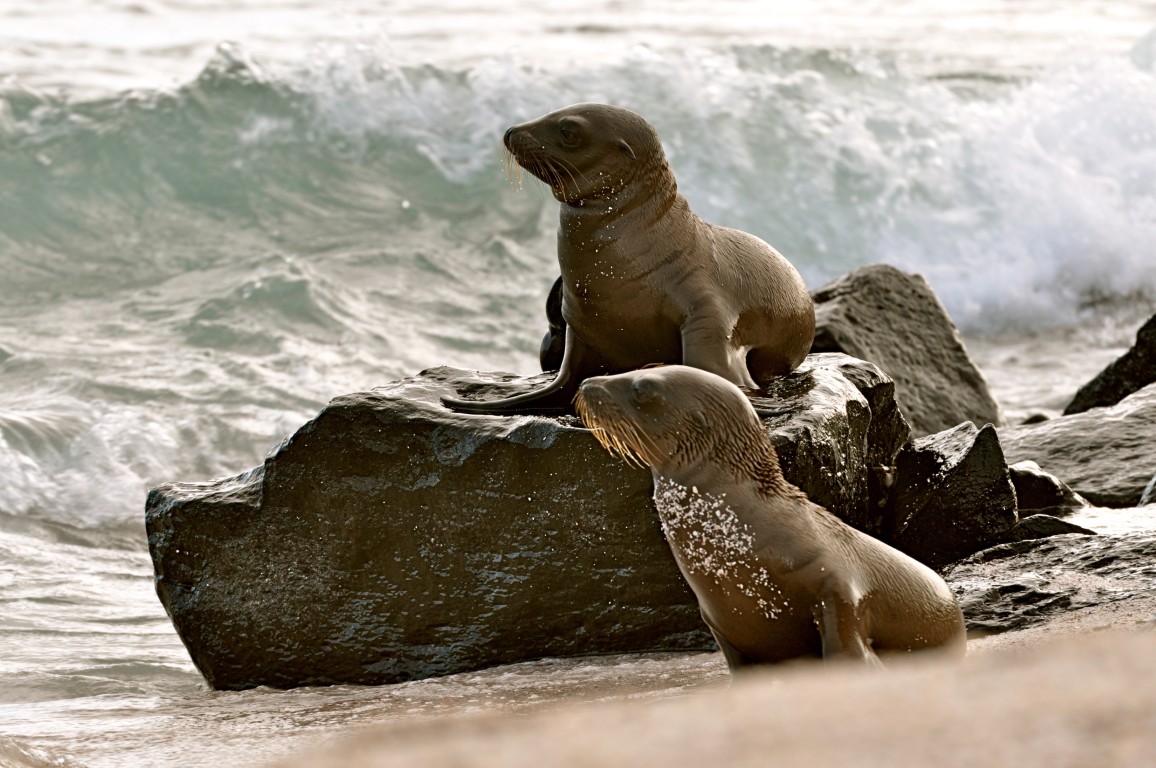
After returning to the yacht for breakfast, you will begin navigation along the coast of Santiago toward Rabida Island. This small but striking island is known for its distinctive red-sand beach, formed from oxidized volcanic material, and its rich coastal lagoon. Rabida hosts a small but important population of Greater Flamingo, which can often be seen feeding in the shallow waters of the lagoon. The surrounding waters are also among the best snorkeling sites in the central islands, offering the chance to encounter a wide variety of marine life, from reef fish to sea lions. You will spend the afternoon exploring both above and below the water, taking full advantage of this diverse and dynamic setting.
As the day winds down, you will return to the yacht and begin navigation toward Puerto Ayora, arriving in the evening.
March 12 – Santa Cruz, Galapagos.
This morning, you will disembark from the Infinity Yacht after breakfast, transitioning from life at sea to the highlands and conservation areas of Santa Cruz Island. Your first stop will be the Charles Darwin Research Station, a cornerstone of scientific research and conservation in the archipelago. Here, you will gain insight into ongoing efforts to protect the Galapagos’ unique biodiversity, including breeding and restoration programs for the iconic giant tortoises. Walking through the station, you will learn about the challenges these species have faced and the work being carried out to support their long-term survival.
From here, you will travel into the lush highlands of Santa Cruz, where the landscape shifts from arid coastal zones to humid, green forest. Your destination is El Chato Reserve, one of the best places to observe giant tortoises in their natural habitat. Moving through open pastures and shaded forest, you will encounter these animals as they graze or rest in muddy pools, slowly moving through the vegetation.
The highlands also provide opportunities to explore lava tunnels, remnants of ancient volcanic activity, and to observe a different assemblage of birdlife adapted to these cooler, more humid conditions. Lodging will be at the Ninfa Hotel.
March 13 – Transfer day Galapagos Quito
After breakfast, you will take a bus to the airport for your return flight to Quito, bringing the Galápagos program to a close. There will be several changes in transportation in your route to the airport, going from a bus to a ferry, and then on to another bus. In Quito you will lodge at Hotel Casa Foch
March 14 – Cotopaxi National Park
On this day you will head south into Cotopaxi National Park, entering a stark, high-Andean landscape. Along the way, you will make several stops to explore the flora of the páramo, searching in particular for Aa and Myrosmodes, terrestrial orchids that thrive in these harsh, near moon-like environments at elevations above 12,000 ft.
As you approach the base of the Cotopaxi Volcano, you will take a gentle walk along the shores of Limpiopungo Lake on an easy, flat trail.
After your time in the park, you continue with a scenic drive of approximately two hours toward the village of Río Verde (5,000 ft.), located within the Llanganates–Sangay Ecological Corridor, a region known for its high biodiversity and ecological connectivity between Llanganates and Sangay National Parks. This will serve as your base for the next three days. Lodging will be at Hotel Miramelindo.
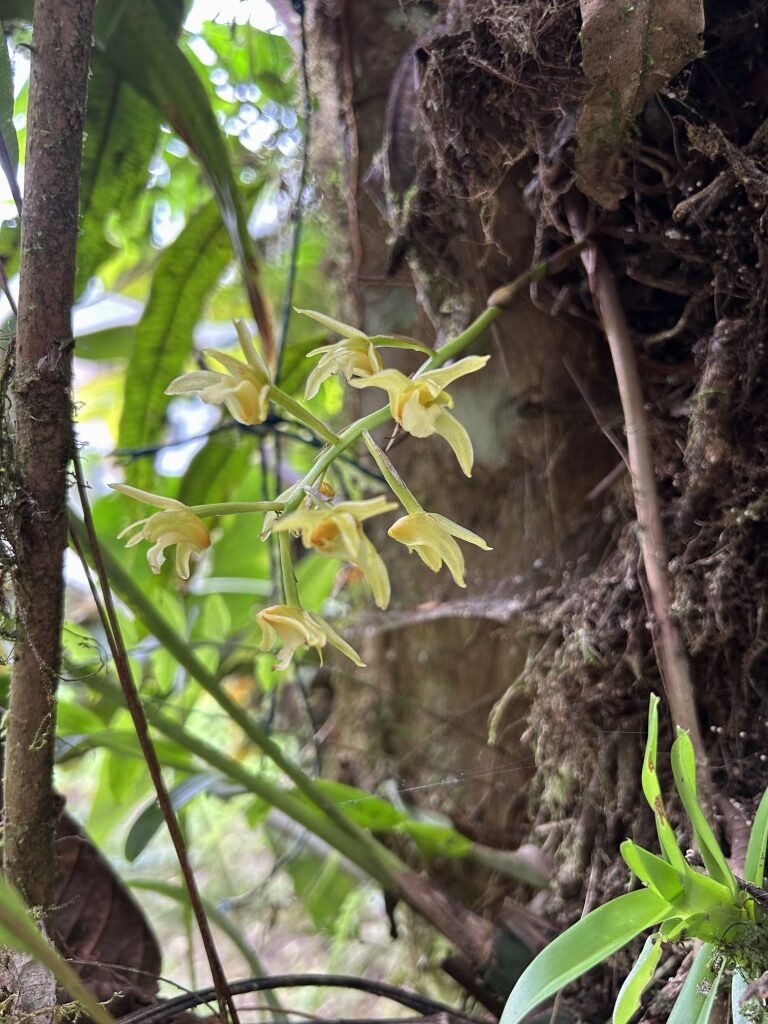
En route, you will make several strategic stops to look for orchids that grow along roadside habitats. Some species are adapted to the drier inter-Andean valleys. You will also explore a particularly dynamic area shaped by the eruptions of Tungurahua Volcano, where pioneer orchid species such as Epidendrum, Stelis, Elleanthus, and Sobralia have recently colonized the recovering landscape.
In the afternoon, you will have the option to visit one of Ecuador’s most well-known waterfalls, Pailón del Diablo. This short, well-maintained hike (0.62 miles, 124 ft elevation gain) leads to a powerful cascade set within a narrow canyon. Along the trail, you will observe orchids such as Elleanthus, Stelis, Sobralia, and Oncidium growing on trees and cliff faces.
March 15 – Sangay National Park
Early in the morning, you will head toward the upper tree line of Tungurahua Volcano, entering a remote sector of Sangay National Park. At approximately 10,500 ft, you will explore a short but rewarding trail of about half a mile. Although brief in distance, the hike offers strong opportunities for orchid observation.
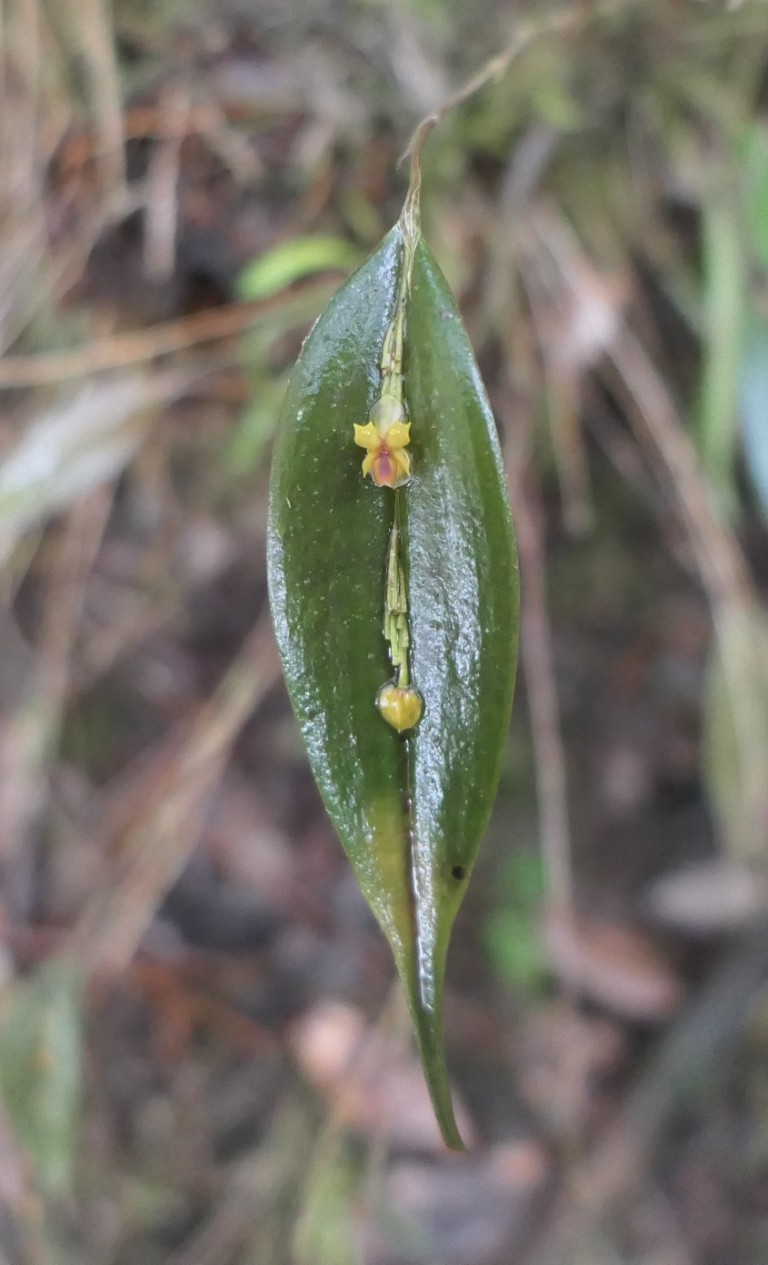
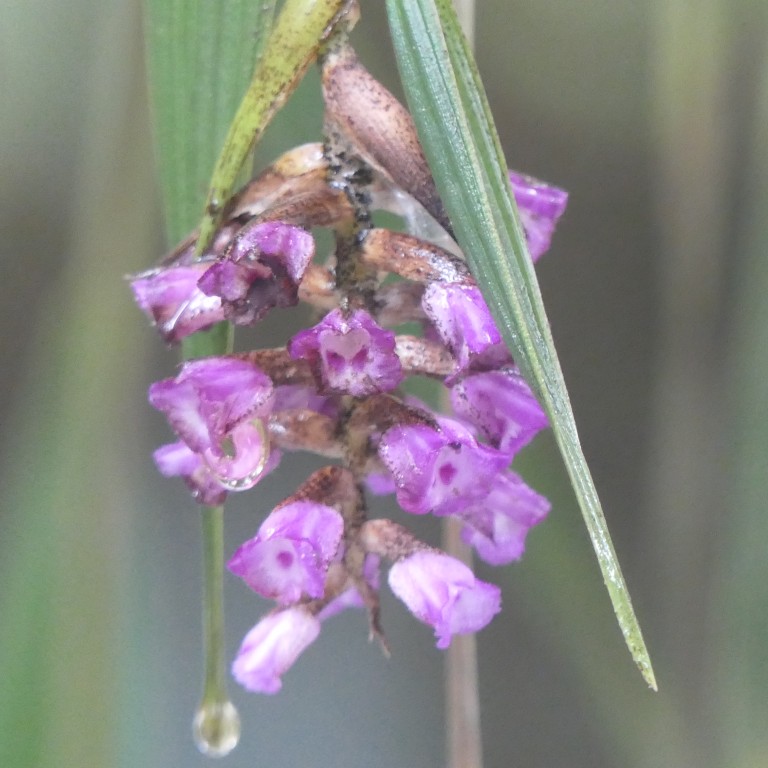
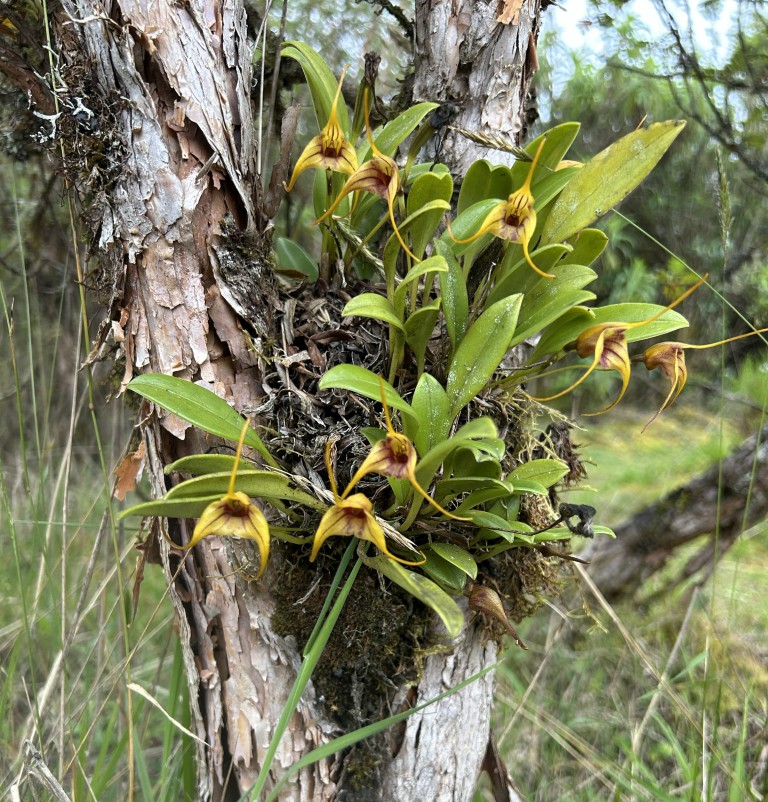
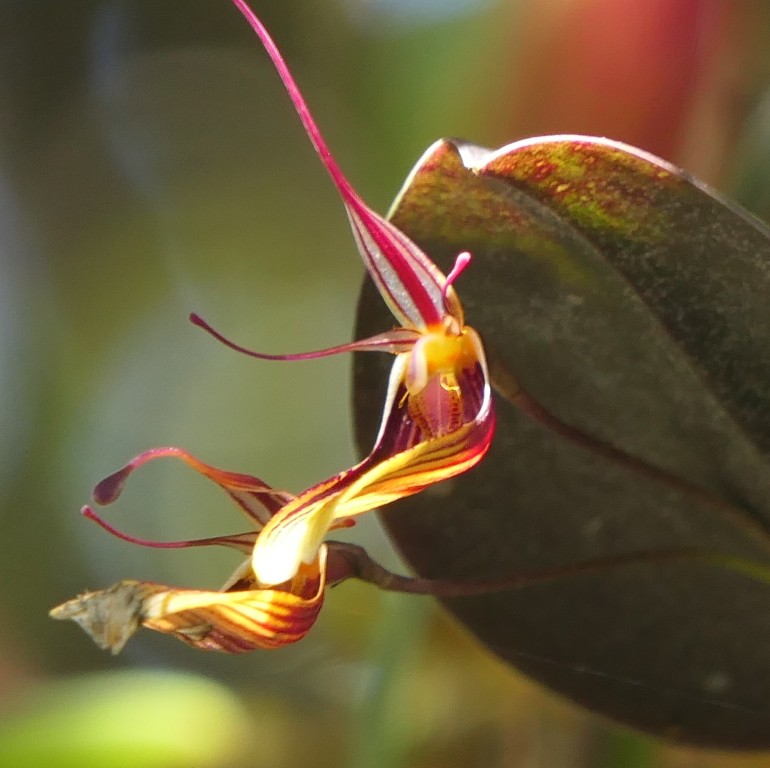
This area hosts an exceptional orchid community. Along the trail, you can expect to encounter genera such as Epidendrum, Elleanthus, Lepanthes, Cyrtochilum, Cranichis, Restrepia, Pleurothallis, Stelis, Platystele, and Fernandezia, each adapted to cool, humid montane conditions. Birdlife here is equally notable. You may encounter Gray-breasted Mountain Toucans, mixed flocks of Mountain Tanagers, Foliage-gleaners, and Guans, and with luck, even the critically endangered Black-and-chestnut Eagle. From the trail, the views are expansive: looking east and north, the Andes descend toward the Amazon Basin. On clear days, much of the forest stretching into the distance corresponds to reserves protected by the EcoMinga Foundation.
You will be accompanied over the next couple of days by EcoMinga rangers—highly skilled local field experts who have spent years developing expertise in detecting orchids in situ. Their presence adds important field knowledge to your experience in this landscape.
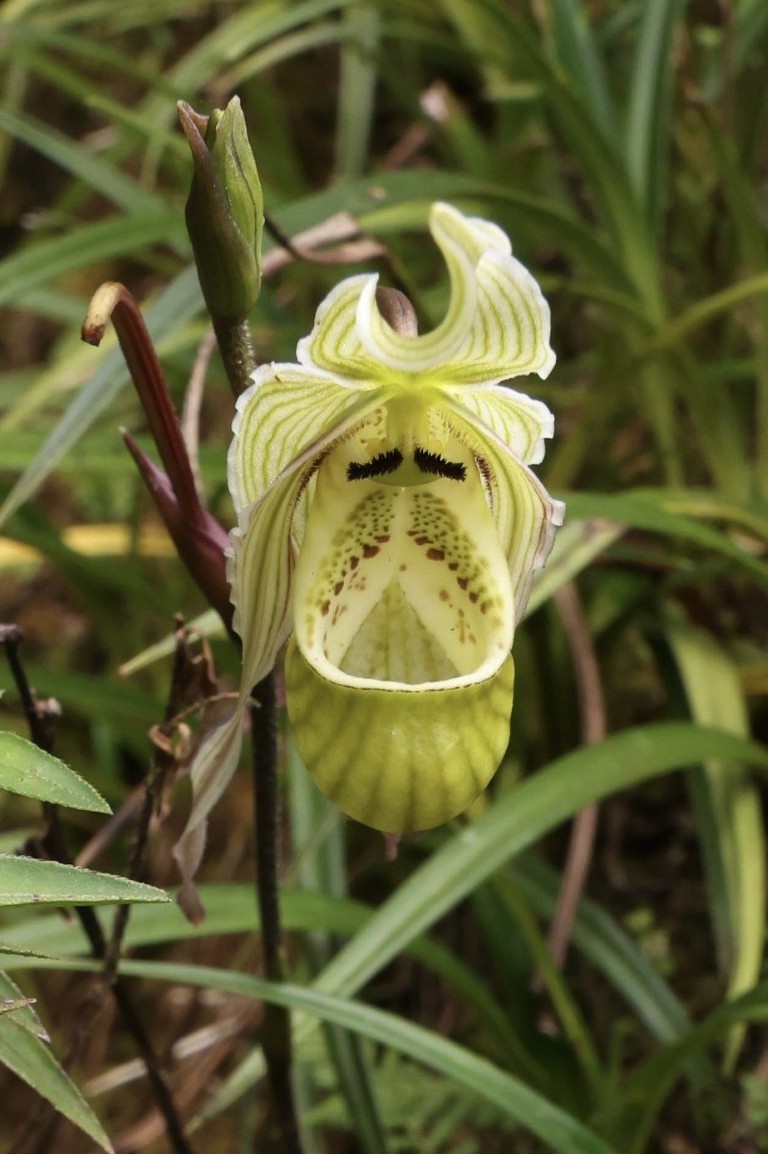
In the afternoon, you will shift ecosystems entirely. Although the Llanganates–Sangay Ecological Corridor is largely defined by cloud forest, it also contains small, isolated pockets of dry habitat. You will visit one of these areas to observe a different set of orchid adaptations. Here, species of Maxillaria, Elleanthus, Sobralia, and Epidendrum grow under significantly drier conditions. Most notable is the presence of Phragmipedium lindenii, a highly unusual orchid within its genus, which grows in sandy soils under full sun in the transition zone between the dry inter-Andean valley and the moist eastern montane forests.
After a full day of botanical observation and field exploration, you will return to Hotel Miramelindo to rest and prepare for the following day.
March 16 – Rio Anzu Reserve
This day your journey will take you to the very edge of the Tropical Andes, where the mountains begin their final descent into the Amazon Basin. At an elevation of approximately 3,670 ft, you will enter the Río Anzu Reserve, a sanctuary owned and managed by EcoMinga Foundation. Unlike the surrounding Amazonian forests, this area is defined by its unique limestone soil composition, a geological anomaly that has driven the evolution of a highly specialized and rare orchid flora. The day’s exploration involves a moderate hike with an elevation change of about 420 ft. Your primary objectives are two of the region’s most important botanical records: the elegant Phragmipedium pearcei and the recently described genus Quechua. These species persist in the alkaline conditions of the limestone karst, making this reserve a key site for in-situ conservation.
The biodiversity of Río Anzu extends beyond its flora. As you scan the canopy for orchids, you may encounter the Saddle-back Tamarin, a small primate that moves through the forest in active foraging groups. The reserve also serves as an important stronghold for the Military Macaw, a species with a highly restricted distribution along the Andean foothills.
The day is split in two. In the morning, you will focus on a productive population of Phragmipedium pearcei, spending extended time here to allow for detailed observation and photography of these lady-slipper orchids in situ. Afterward, you will head to the reserve facilities at Casa Anzu. This site features an observation platform and active bird feeders, which frequently also attract monkeys, allowing close-range wildlife observation. In addition, a rescue collection of orchids from the reserve provides a closer view of species being maintained within these protected areas.
After lunch at a nearby local restaurant and a full day of fieldwork, you will return to your base in Río Verde before your next stage of the itinerary begins. Lodging will be at Hotel Miramelindo.
March 17 – Palmonte Reserve
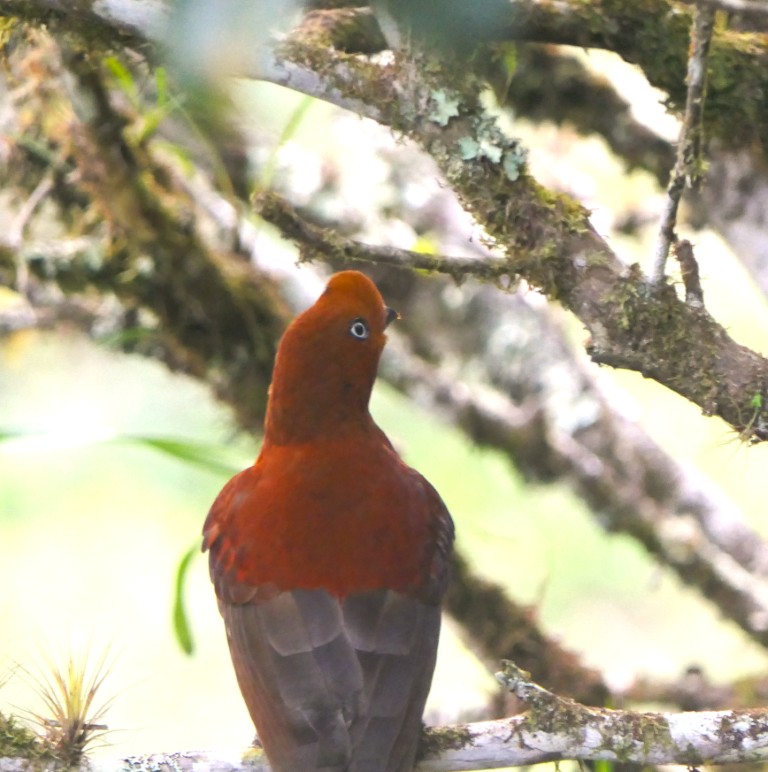
This day you will ascend to a higher elevation, exploring a private sanctuary at 4,600 ft within the buffer zone of Sangay National Park. This family-owned reserve has become a focal point for EcoMinga Foundation research; early expeditions into its upper reaches (up to 9,000 ft) have brought down orchids that later inspired the creation of a dedicated on-site botanical garden. Your morning will be divided between the study of these orchid species and a visit to a cock-of-the-rock lek (Rupicola peruvianus). Here, you may observe the dense, active display of males gathered in competitive courtship, one of the most characteristic avian behaviors of the Andes. Guided by EcoMinga rangers and local experts, you will also have the option to join an additional hike if you wish to experience the flora and fauna directly in their natural setting. Lodging will be at Hotel Miramelindo.
March 18 – Papallacta Hot Springs
After an extensive journey through the diverse ecosystems of the Andes and the Amazon, your focus shifts toward rest and recovery. You will depart from Hotel Miramelindo in the morning, and arrive at the Papallacta Hot Springs for lunch, situated at 9,000 ft. Formed by the geothermal activity of the Cayambe Volcano, these thermal waters provide a setting for recovery, surrounded by curated gardens that host a final selection of highland flora. Lodging will be at Termas de Papallacta.
March 19 – Return to Quito and End of the Tour
On the morning of the 19th, you will begin your final descent from Papallacta toward Quito, though botanical observation continues en route. This trip generally takes about an hour and a half. You will ascend briefly to 12,000 ft to enter an ancient Polylepis forest. These “paper-tree” ecosystems function as high-altitude biodiversity islands; here you will have the opportunity to observe orchid populations adapted to thin-air conditions. Your tour ends with your arrival to Quito. Hotel Casa Foch will be available for those who do not have other plans.
We will be using three lodgings. In Quito, Hotel Casa Foch; in the Galapagos the motor yacht Infinity; and in Rio Verde near Baños de Agua Santa, the Hotel Miramelindo. Hotel Casa Foch is a comfortable, economical lodging in Quito owned and used for many years by the originators of Fundación EcoMinga, housing guests, students, and researchers. The luxury motor yacht Infinity will absolutely spoil you for boat travel anywhere. Hotel Miramelindo is a charming hotel a few miles from Baños de Agua Santa entirely decorated with the artistic work of one of the proprietors. It is uniquely situated for exploring the reserves of Fundación EcoMinga in the Pastaza Valley.
Coming soon